Thursday, October 23, 2008

Think Cosmically. Act Globally


There is an urgency to the book,
The View from the Center of the Universe by Joel Primack and Nancy Ellen Abrams.


It is not one of those many books that try to reconcile science and religion or evolution and creation and so forth. This book moves beyond those controversies to the heart of the universe itself, our place in it, and what are we going to do about the challenges we face. Human beings could be around for 100s of millions of years,
if we make it through the next few decades. That is the urgency.

Human beings really don't think we matter much. We don't think we are that interesting or unusual or special. When in fact, science shows us that we are incredibly unique. We need to wake up to the fact that it took 13 point seven billion years for us to get here and we have some work to do. We are the consciousness of the universe itself.

Primack and Abrams are a husband and wife team. Primack is a leading astrophysicist and Abrams is a cultural philosopher and writer. They are on a mission to educate the public on what science is showing us about the Universe and our central place in it. The book is divided into three sections,

Part 1: "Cosmological Revolutions" is a history of how our cosmology has changed and has moved us from the "center" to the periphery.

Part 2: "The New Scientific Picture of the Universe" is just that. This is an amazing tour of what science is showing us about our 13.7 billion year old universe.

Part 3: "The Meaningful Universe" encourages us to learn and get excited about cosmology and to grow spiritually by doing so.

Here is the thesis of the book in three steps:

1. Premodern societies saw themselves as central to the universe and made myths and religions that embraced this centrality. While their cosmology was wrong, their mythology was correct in that they saw themselves as a meaningful part of the whole. The universe as they saw it "fit" them and they "fit" in it.

2. Modernity put humankind on the edge of the universe. Not central. Not important. Small in a vast meaningless cosmos. We no longer "fit." We are accidental. We are therefore filled with existential angst. We have our cosmology right, but our mythology is lacking. We cannot go back and embrace any one religion's mythology wholesale as it fits an ancient, outdated cosmology.

3. However, modern science is showing that we do "fit" the universe. We are central in many ways such as size and in time. We can develop a mythology that affirms that reality. We can draw from those symbols and myths from our premodern ancestors that work to help us reclaim the center of the universe again while embracing modern cosmology.

Check this two minute film to get a better picture of what they are talking about!

Here is a helpful review of the book by James McGrath.

I had a chance to meet them in person and chatted about that on this post, I Want to Be an Ancestor.

The ideas in this book are too large to do justice by writing a review. I have had to read this book more than once to really get the passion behind the project. A commenter on my blog wrote that it is hard to find this new universe
spiritual. It isn't automatic or easy. I could see that the authors had a spiritual connection to this new universe they were discovering, or perhaps God was revealing to them. They had spent enough time with it to get it.

Now, what I am about to say is not about cosmology. However, it is related. I caught a little bit of this spiritual excitement regarding our natural world when Michael Dowd and Connie Barlow were in our area a few weeks ago. Connie did a two hour program called the River of Life. It was for children (but also for adults). It was an ancestral tour. We learned all of the common ancestors we share with every species of life living today. There are only 40 of these
concestors. We went through our evolutionary family tree and stopped and honored each concestor with a song and a dance that Connie created.
  • I don't know if it was the two hour program that had children in rapt attention.
  • I don't know if it was because I had never had our evolutionary history presented in this way.
  • I don't know if it was because we were celebrating evolution in church.
  • I don't know if it was because I could now begin to follow our family tree.
  • Whatever it was, it was moving.
I did feel connected in ways that I hadn't felt before with all my relations from the bonobo to fungus. It was more than intellectual knowledge. It was spiritual feeling. That is what church is about, right? I realized, really realized, that the mass extinction of species at a rate unequalled in 65 million years, aren't just species. They are family. We are all family, human and non-human.

I recommend this book for a study group. I also recommend finding creative ways to sing and celebrate the good news of our cosmic story and of our place in it. Maybe if we can do that, we can understand our mission as preserving and saving this beautiful fragile planet for our descendants? I have a few questions for discussion:


  1. How often do you hear or preach sermons on science, specifically evolution and cosmology?
  2. Is preaching on the Book of Nature as important as preaching on the Book of Scripture?
  3. Do you think we should devote more time and energy to scientific literacy in church?
  4. Has the church been more of a roadblock or a roadway to scientific discovery and education?
  5. What might be some theological biases against modern cosmology and evolution that need to be overcome? How can that be done?
  6. Evaluate this sentence: “Thus our descendants could have many billions of years to live together—if we can just get through the next few decades without disaster.”
  7. And this: "The major threats to human survival today---world environmental degradation, extinction of species, climate destabilization, nuclear war, terrorists with weapons of mass destruction—result from unrestrained use of such new technologies without a cosmology that makes sense in the nature and scale of their power."
  8. How is being in the center important for our sense of value?
  9. Do you agree that if we are able (through myth, symbol, awareness, etc.) discover our place in the universe, that we will be motivated to greater action on behalf of the planet and ourselves?

Check out this video of the Hubble Deep Field. The most important image ever taken:


Read and Learn -- Book Club coming soon to a blog near you

If you have been following the schedule for Thursdays that we posted several months ago, you would know that today should have a review of a book, movie or other resource; and the monthly Book Club feature got off to a great start and then -- not.

There is a fascinating story involving a hurricane, a vacation, lots of work, an Amazon shipment gone astray, communication problems -- I know, save it for the movie version.

Here is the scoop.

We are getting back on track. Check back next week for a Review of a book, movie, or other resource. The following Thursday which will be the first Thursday in November and should be a book club day will, instead, feature something unique for us, a question and answer session with the author of our next featured Book Club selection, and a member of this blogring, Carol Howard Merritt. Then, on the 1st Thursday of December Book Club will be back with Carol's book, Tribal Church.

Tribal Church is about reaching and ministering to adults who aren't yet middle-aged. For many of our churches, they are something of a lost generation. This is a chance to start thinking how to refind them. Oh, and it is available at Amzaon.

See you here next week.

JusticeSeeker

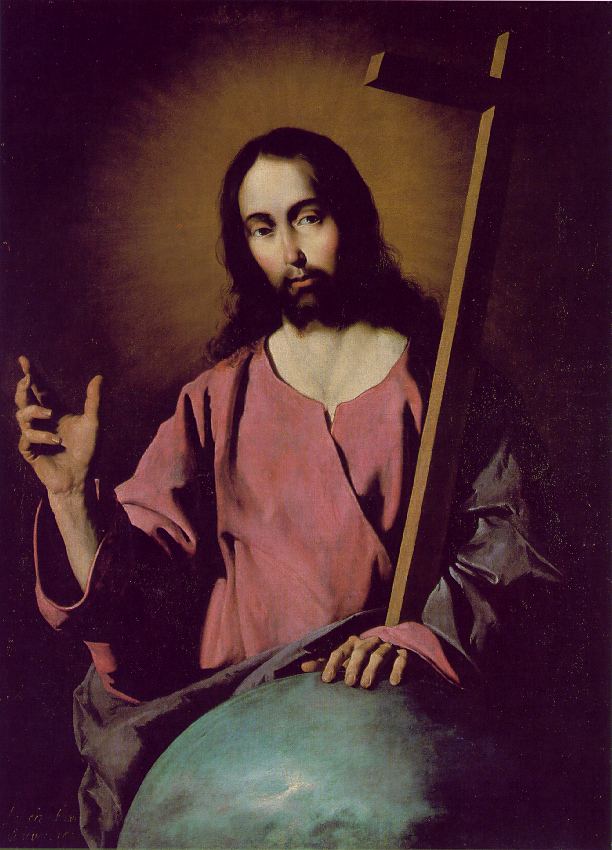
Religious Art: Christ of the Polls

Christ does not belong to any of the parties...

Christ of the Polls

...and only He can bring the donkey and the elephant together.

Tuesday, October 21, 2008

Getting to Know Springfield

Time for Wednesday's Joyful News on Ministry.


This week we salute Covenant Presbyterian Church of Springfield, Ohio!


They have a Kids and Community outreach program. The program provides inexpensive field trips so students in the city schools can learn about Springfield and its history. The church provides transportation and incidental costs as well as volunteers to serve as tour guides! Here is a news story in Tuesday's
Springfield News-Sun:

Local government and history is a part of the third grade content standards set by the state of Ohio, said Bisher, a teacher at Lagonda Elementary.

"We don't have, obviously, anything in our books about local history," he said. "One of our standards is local government and history and so this is the coolest way to do it."

....For many of the children, it's the first time they've been downtown and the guides enjoy telling them about Springfield's old nicknames — Champion City and Rose City — or about A.B. Graham's and the 4-H organization's homegrown roots.

"It also gives the children the experience just to be in a downtown setting," said Henry, adding that the old-fashioned revolving doors are always a big hit. (Read More)


Covenant Presbyterian Church members, the Simpson Family, lead students on a tour of Abbey Road in downtown Springfield.


Great job Covenant Presbys!


Jesus is dancing in Springfield!


John Shuck is the pastor of First Presbyterian Church of Elizabethton, Tennessee and he blogs at Shuck and Jive. Contact him with your joyful news at this E-mail.

Monday, October 20, 2008

Oops

There's a funny story about the newest addition to our blog roll and web ring.

I got an email from a guy who was having trouble getting the ringsurf code to work on his page. That happens, and I gave him a tip (I only have one tip; I'm not an HTML expert) and I went ahead and checked out his blog while I was at it.

There I ran into a snag. See, the site I clicked to was not actually a blog. And it certainly wasn't Presbyterian. What to do, what to do?! I shared the link with the other PCUSA Blog contributors, then attempted to craft a tactful response that said that while of course he was welcome to link to us, we couldn't actually include his site in the web ring.

This was a first for me, as it was the only site I'd ever "rejected" for the ring. I'm all about respectful disagreement and have happily included several blogs in the ring whose politics, theology, and style differ widely from each other. But this site . . . just didn't fit into our conversation. I compulsively checked my email for a response, and soon it came.

Fortunately, the blogger - for he really is a blogger - followed up with confusion and more information and I quickly realized what had happened.

Apparently, there was a typo in the original email, which linked to quite a different site than intended.

Mystery solved!

By way of apology and welcome let's all go visit seminarian Mathew Burl at Musings, Questions, and other Ramblings and give him a little Welcome to Blogging encouragement!

Sunday, October 19, 2008

Sunday Devotions: Entrapment

Sunday Lectionary Verse

Matthew 22:21b Then he said to them, "Give to Caesar what is Caesar's, and to God what is God's."

Entrapment is something we used to see happening in every Perry Mason, Matlock or Columbo show. Right at the very end of each episode, the criminal would say or do something that would instantly reveal their guilt. There was also a kids' program called Scooby Doo, where the villain was finally unmasked in the dying seconds of the show. All of these programs followed the same formula, so that eventually viewers began to know who the culprit was, long before you got to the end of the show.

Jesus is facing the same kind of classic formula of entrapment in this episode from the Gospel. The Pharisees are out to get Him, so they ask Jesus a trick question. They've worked out in advance that if He says it's right to pay taxes to Caesar, then they could charge Him for collaborating with the enemy and get the people to stone Him. If Jesus answered that it wasn't right to pay tribute to Caesar, they could then report Him for sedition against the Emperor and have the Roman governor execute Jesus for treason. They really don't care how He answers their question; all they want is something to use against Him.

But Jesus knows all about their little game. He's way ahead of them, so He gives them an answer that they haven't anticipated, which astounds them. "Give to Caesar what is Caesar's, and to God what is God's." In other words, pay your taxes and honor God.

As Christians, other people sometimes assail us about our beliefs. If we try to be clever with our answers, we'll end up in a theological tussle or a doctrinal muddle. However, if we are true to Christ and depend upon the Holy Spirit during those moments when we are called to defend our faith, He'll give us the right words to say, at the right time, to the right people.

Prayer: Lord Jesus, sometimes we feel that our beliefs are being personally attacked. Sometimes those attacks come from strangers, but more often as not, those piercing questions and taunting remarks are expressed by other church members and Christian colleagues. Give us the right words to say and keep us from being fearful or unfaithful. In Your Holy Name, we pray. Amen.


Stushie is the writer of the daily devotional "Heaven's Highway," which is also podcasted at http://www.stushie.libsyn.com/.

Saturday, October 18, 2008

Lectionary Ruminations: Scripture for Worship on October 19, 2008

Here are the passages for October 19, 2008, the 29th Sunday in Ordinary Time (Year A). All links are to the TNIV via BibleGateway.com, but if you prefer another translation, feel free to use that instead (either with your own Bible, or via the drop-down menu at BibleGateway.com).

Exodus 33:12-23
  • Moses seems to be asking God to be more specific about a couple of matters. What does Moses need clarification on? Why is Moses still unsure?
  • God promises Moses in verse 14, "My Presence will go with you." Why then does Moses in verses 15 and 16 seem to express concern about the possibility that God's Presence doesn't go with them? (Note: The capitalized "Presence" is as it appears in the TNIV. Why do you think the translators rendered the word in this way?)
  • God grants Moses' request to show Moses God's glory. Why does Moses make this request? What does Moses expect to see? What does it mean to see God's glory? Why does God say that Moses (or anyone) can't see God's face and live? Is this a prohibition of permission, or a statement about the overwhelming power of God's glory? Indeed, given the apparent dangers, why does God grant the request in the first place?
  • Is Moses being given a privilege denied to Christians of today? Why do you (or don't you) think so?
Psalm 99:1-9

1 Thessalonians 1:1-10
  • This letter is most often thought of as being written by the apostle Paul, but the first verse also attributes the letter to Silas and Timothy. Why contributions do you think they might have contributed to this letter? Does the inclusion of these extra people in the ascription tell us anything about Paul's contribution to this letter or to the church for which it is being written?
  • What information can we learn about the activities of the Thessalonian church by what it written in these verses? What is Paul's (I'll assume the inclusion of Silas and Timothy when I refer to Paul for the rest of my comments on 1 Thessalonians in the coming weeks) relationship with this church?
  • What is the nature of the "coming wrath" that Jesus "rescued us from"?
Matthew 22:15-22
  • Just a quick (and increasingly standard) reminder that this passage picks up without a break from the gospel reading of last week. Questions of context from previous passages may still be relevant here.
  • What was the nature of the imperial tax collected for Caesar? How does it compare and contrast with taxes of today?
  • Jesus says "Give back to Caesar what is Caesar's, and to God what is God's." What is Caesar's, they it should be given back to him? What is God's, that it should be given to God?
  • Modern American coins (and paper money, too) do not depict living people, but rather historical figures who have long since passed away. What might Jesus have said to us in a similar situation?

Friday, October 17, 2008

Question for the Community: Website Policies

I work in a Presbytery office, so we get a lot of calls or emails asking for things that range from easy to simply bizarre.  Every once in a while we get a great question that begins conversation in the office and among others involved in the Presbytery.  I got once such email this week from a Youth Director at a church of about 1,000 members.

We've been wondering for a long time about how to write / adopt a policy on posting pictures of minors on our church website. We really want to get some real, official documentation together on this and set up a GPC-Wide policy on this matter.


I've heard that there is a group at the Presbytery level that is working on this very project. Could you get me in touch with them? OR, if they have already produced some policies on this which we can just use as a reference and follow, could you send me that information?

Our Presbytery Policy is that we do not post any pictures of children, due in part to the fact that we do not have direct contact with the families that are involved to have any good discussion about the value.  If a church sends us an announcement that includes pictures of children, we will use that based on the idea that the church has such a relationship. 
 
So - what is the policy at your church? 

Thursday, October 16, 2008

Thursday --Adult Education

A couple of years ago I was surfing the internet looking for ideas for a short-term adult Sunday School class and found The Wired Word.

This is a subscription service that emails a lesson based on current events (which can also be feature stories as well as news stories) to the class leader each week. The lesson includes a leader's guide, with appropriate scripture references, for class discussion. There is a shorter participant guide that can be emailed to the class members and printed for use on that day.

I used the lessons with a class during the summer session and have also found them very handy to use when you just need a "bridge" of week or two between longer study topics. One of my friends took the idea to her husband, whose Sunday School class has happily used The Wired Word as its curriculum for the past two years.

This is a non-denominational curriculum and it is quite affordable since the subscription is $70 per year for the church. Since the past lessons are archived on the website, the class leader can go back and use another lesson if they don't like the topic for the week. Check it out!

PresbyBlogger's Book Club will return next week when John Shuck will host discussion of our October selection The View From the Center of the Universe: Discovering Our Place in the Cosmos by John Primac. See the sidebar for more information about this book. You still have time to read it and join in next Thursday's discussion!

Tuesday, October 14, 2008

A Theater Grows In Brooklyn

As I was googling about looking for Presbyterians in the news, I stumbled upon this article in The Brooklyn Paper: Bam! New Theater on the Map.

They say the neon lights are bright in Fort Greene, thanks to the arrival of an acclaimed Off-Broadway theater company to the brownstone neighborhood.

The Irondale Ensemble Project has converted a disused wing of the historic Lafayette Avenue Presbyterian Church, on South Oxford Street, that has not been used since before World War II into the company’s first permanent home in its 25-year existence.

“Part of the challenge for us was that we wanted something that was completely versatile and raw and changeable,” said Terry Greiss, Irondale’s executive director. “This is the perfect space for us.”

His group’s domain is the upper floors of the massive church between Lafayette and Greene avenues, which was once a hotbed of abolitionist fervor before the Civil War.

I checked out the website of the Lafayette Avenue Presbyterian Church and found a really cool congregation. The Lilly Endowment declared it
as one of the 300 Outstanding Protestant churches in the US. The Endowment identified LAPC as one of the American congregations that “nurture the human spirit, draw people closer to God, bring them into loving service and exemplify what is best in local churches throughout America.”
Among other things, this church is affiliated with the New York Jobs With Justice. The pastor, David Dyson serves on the board.
Founded in 1987, JwJ’s mission is to improve working people’s standard of living, fight for job security, and protect worker’s right to organize. JwJ’s core belief is that in order to be successful, worker’s rights struggles have to be part of a larger campaign for economic and social justice. To that end, JwJ has created a network of local coalitions that connect labor, faith-based, community, and student organizations to work together on workplace and community social justice campaigns.

Social justice is the heart of this congregation from its abolitionist beginnings to the present. Rev. Dyson was a former staffer for the United Farm Workers and the Amalgamated Clothing and Textile Workers.


You'll enjoy this interview in which David tells how he went from union worker to pastor.


Back to BAM! According to the article this portion of the building hasn't been in use since before World War II. Now it will host the Irondal Ensemble Center that opens in October.


From abolitionist fervor to theater. It all keeps Jesus dancin'. Hey, if you have been googling Presbyterian news and think a story would be good for Joyful News on Ministry, let me know! Let me know what you are doing as well!


John Shuck is the pastor of First Presbyterian Church of Elizabethton Tennessee and he blogs at Shuck and Jive. Contact him with your joyful news at this E-mail.

Favorite Greek Words

There's been too much hate in this political season lately. I'm glad to hear that things might be taking a turn for the better, now, but it irritates me that politics can get so mucky-muddy. I remember back to my high school debate days: We never argued "the other team is wrong because they got caught at a party with alcohol!!" Or "the judges should vote for us because my girlfriend cheated on me last week!" I remember learning all about those kinds of things in my college argumentation class... they're called fallacies.

In contrast to some of the hate-mongering and inciting going on, I've been thinking about love. One of the things I really appreciate about the Greek language (though I know almost nothing about it), is that it has so many distinct words for love. My favorite love-related words are probably hesed and agape.

I always think about hesed (loving kindness) as a way that we should treat each other in society. A way that we're called to treat each other and build strong interpersonal relationships. For an introvert like me, that can sometimes be hard.

I like agape because it is a love of giving or selfless serving. I think that's a great way of living to aspire toward. It comes in handy with my children, with friends, those I disagree with, and most importantly my marriage.

What's your favorite Greek word?

Monday, October 13, 2008

More Joining the Respectful Conversation

Awesome new blog for the webring this week:
Conversation in Faith Weblog: A place for thoughtful, respectful discussion.
by: Hello, I am Nancy Janisch. I am a transplanted Kansan living in western Michigan. I spent 20 years working as a small animal and emergency practice veterinarian and then I went to seminary. So as you might guess, I have an interest in the area of science and religion. I am also interested in the larger topic of how people of faith interact with the world and what informs and shapes our faith.

As the title suggests, this blog is intended to encourage thoughtful, respectful conversation about faith. Respectful conversation sometimes seems to be a forgotten art in today’s world but I hope we can practice it here in this corner of the blogging world. The point of this blog is discussion, not diatribe and not debate. I don’t think that I have all the answers, and I won’t assume that you do either. But I do think by talking together we can all learn. So I invite you to respond to my posts. I hope we will ask each other questions, share our views and think together about various topics. I am a Christian and that will be evident in my writing, but I hope that people from a variety of faith traditions will feel welcome to participate here.

But wait! There's more! In fact, there are several blogs by a blogger called Castaway:

CovenantStuff: Sunday messages from Covenant Presbyterian Church, Los Angeles (Westchester), CA.

TakeFive: Politics and faith - not always sure of the interface, but working at it - with Jesus and justice at the heart of the effort.

Thoughts: Inspiring thoughts for the congregation.

Bright and Darkened Lands: An interactive lectionary site to offer comment.

Finally, a question posted to the blog that I'm tossing out there for all of you to consider:

We are just starting our search for a new Associate Pastor. Any suggestions from the bloggers out there on ways we could post online to spread the word outside of our normal Presbytery search? Thanks!
posted by L Sawyer from Tacoma, Washington.

Sunday, October 12, 2008

Sunday Devotions: Sonrise

Autumn sunrises are beautiful to behold. They remind me of the power of God and the healing that Christ brought into the world.

Podcast version here

Malachi 4:2 But for you who revere my name, the sun of righteousness will rise with healing in its wings. And you will go out and leap like calves released from the stall.

I love this time of year, especially at sunrise. The sun peeks over the horizon dressed in scarlet. The sky glows with a mixture of crimson reds and yellows, bathing the whole earth with a soft rosy hue. It makes me feel glad to be alive and as I watch the sun arc across the morning sky, I feel renewed and refreshed at the same time.

I guess the prophet Malachi must have experienced the same when he talks about the sun rising with healing in its wings. That’s a wonderful description of being re-energized by God’s power. In these uncertain times when everything is changing, it’s good to know that God’s presence is never taken from us. Even as I write this today, I feel His presence as if He’s watching me over my shoulder.

Generations ago, Native Americans used to get up before dawn and face east. As the sun rose, they felt the power of the Great Creator Spirit enter their bodies and souls. It was a good start to a new day. It was a powerful connection to God that even the Hebrew prophets like Malachi would have understood.

Perhaps sometime this week, we should all make time to get up before dawn and await the presence of the Lord. As Christians, the rising sun reminds us of the Rising Son, who overcame the desolation we call death, to open up an eternal opportunity to always be with God. To me, and to many other Christians, Christ is the Son of Righteousness, who rises to bring healing to a broken and sinful world. He arcs across the sky of our days so that when we come to the last horizon, He will be there to heal and restore us at last to the Great Creator.

Prayer: Almighty God, the skies declare the glory of Your works, and the sun reveals Your holy power. We are fortunate to see and experience these wonderful things. Refresh and renew us today. Heal us of all our weariness, anxiety, and pain. In Christ’s Holy Name, we pray. Amen.

Stushie is the writer of the Presbyterian daily devotional Heaven's Highway

Saturday, October 11, 2008

Lectionary Ruminations: Scripture for Worship on October 12, 2008

Here are the passages for October 12, 2008, the 28th Sunday in Ordinary Time (Year A). All links are to the TNIV via BibleGateway.com, but if you prefer another translation, feel free to use that instead (either with your own Bible, or via the drop-down menu at BibleGateway.com).

Exodus 32:1-14
  • The Exodus story is filled with well-known examples like this one of Moses' people doing things that get them in trouble. Leaving aside that they haven't yet heard the commandment against idols that Moses is still on the mountain picking up from God, one wonders at how this particular idolatry managed to take place. For example, when Aaron says about the gold calf the Israelites just got done creating "These are your gods, Israel, who brought you up out of Egypt," how is it that either he or they can actually believe such a thing? (Side question--why does Aaron seem to be using the plural "gods" for what seems to be a singular object: the golden calf?)
  • Moses talks God out of destroying the Israelites after God proclaims intentions to do so. What does this tell us about the nature of God? Some scholars have used this passage to argue that God is not, as is often claimed, unchanging. Do you agree or disagree? On what basis?
Psalm 106:1-6, 19-23
  • When considering the questions from the Exodus passage above, note this Psalm, and particularly the last few verses. Does the fact that God's people remember these events in a Psalm like this one affect how you think about the Exodus story itself?
Philippians 4:1-9
  • Paul does a bit of name-dropping here. Why does he take the trouble to do so? What can we learn about the people he mentions here? Does the fact that two of these people specifically named are women tell us anything important? When Paul addresses his reader as his "true companion," what does this tell us about his audience, and the potential relationship they may have with these named individuals?
  • Right now, in the midst of economic struggles, a presidential election that many people have deep feelings about, and any number of other real-life trials, Paul's advice to "rejoice in the Lord always" and "not be anxious about anything" can be especially hard to follow. Other than just to "try harder," how might we better attempt put these words into practice, even in such times? What kind of assistance does Paul leave us with, that we share these teachings with our fellow believers?
Matthew 22:1-14
  • Despite the fact that this reading is the beginning of a new chapter, it continues the trend of the past couple of weeks in continuing on straight from the previous week's reading without skipping any verses. Keeping in mind that the chapter breaks were not added to the Scriptures until many centuries after the words themselves were written, how might the context of the previous readings affect your understanding of this parable? Who is Jesus talking to? Why does he share this story with them?
  • In the context of the parable, why might the subjects have ignored the invitation to the banquet? Even more so, why might they have treated the king's messengers so cruelly? Do such actions make sense? Do they make sense when these same actions are applied outside of the context of the parable itself to what the parable is talking about in the real world?
  • Assuming that the king in the parable is a reference to God, how do that actions of the king toward the people originally invited to the banquet inform our understanding of God?
  • The king invites other people to the banquet. All types of people, "the bad as well as the good." We have come to expect this kind of action from God, and we like to talk about how all-encompassing God's love is. But the parable doesn't end with this invitation. Instead, we get a perhaps unexpected bit about the person who comes to the banquet without wedding clothes. Given that people were drawn in from everywhere, how reasonable is the king's expectation that the man should have had wedding clothes to wear, let alone that he'd wear them? What aspect of the real world is the parable trying to get at here? And, again, how do the king's actions toward this man inform our understanding of God.

Thursday, October 09, 2008

Seminary Reflections: What's a truly practical class?


This is my first post in a new monthly column on Presbyterian Bloggers creatively entitled, "Seminary Reflections."  It's about, um, well, reflections from a Presbyterian seminarian.  

By way of introduction: I'm a senior Master of Divinity student at Columbia Theological Seminary in Decatur, Georgia.  Last year I served as a full-time Assistant Minister at a congregation in the Church of Scotland during which time I started my blog, A Wee Blether.  I've really enjoyed my time at Columbia and am a big advocate of the school (not to say we're perfect).  That said, my posts will be more broadly focused on PC(USA) seminary in general rather than specifically oriented to life at Columbia.  

My first reflection has to do with seminary curriculum and the practical life of a pastor.  For a few years now, I've helped gather support during Columbia's annual Fall Phonathon.  This task involves calling alumni and friends of the seminary to ask for pledges to the Annual Fund.  When speaking to a CTS grad currently serving as a pastor, one of my favorite questions to break the ice is, "I'm about to sign up for courses for spring semester and have room for some electives.  Now that you're in the parish, looking back, what sorts of classes do you wish you would have taken more of?"

Curiously, I get a wide variety of far-from-consistent answers.  There was the pastor who told me he really wishes he would have taken more Bible courses.  He said that several folks in his congregation just know their Bible better than he, so he wished, for their sake and his, that he would have taken more Bible electives.

Then there was the pastor who told me I should take every Christian Ed course I could.  "That's what you use immediately when you get out," she said.  "Even if you know everything in the world about something, if you don't know how to teach it it's no use."

Several folks I spoke with said they wished they had taken more classes from a particular beloved professor.  Others, now serving a church in a context they had not anticipated, wish they would have taken a course particular to inner-city ministry, or rural ministry, or older adult ministry.

Though I'm not participating in this year's Phonathon, I have the usual class choice dilemma, this year even more so as it's my last semester.

Should I take, "Theology, Ethics, and Sexuality" or "Death, Dying, and Bereavement"?  "Paul Tillich on Sin and Salvation" or "Literature for Christian Children"?  "Wisdom Literature" or "Hispanic and Latino Culture and Theologies"?  There's the ultra practical "Leading Christian Worship" or "Greek Reading" or "Exploring the Missional Church"?

What a quandary!  Thank goodness, I'm under no illusion that one's pastoral education stops when one graduates.  In fact, I think only then does it truly begin.  But it's an interesting thought experiment, current pastors considering what they would like to study more of at the moment. 

If you're a pastor out there (or other interested folk), what would you choose?

Walk Away

If you had asked me fifteen years ago if I was going to be a minster I would have laughed. I was in no way the kind of guy that became a minister, let alone a fellow that loved or worshipped God. I was not the worst kid either.
With years of insight that breed wisdom processed by therapy I can see now the seeds being planted in my youth for the call on my life these days.
I was baptized a Presbyterian on November 02, 1975 and dabbled in the church as much as an infant could. My folks divorced in 1981 and I split the Presbyterian Church soon after. I did not find my way back until the spring of 2002.
After a long journey filled with questions about questions framed in heartache and sorrow I arrived at the doors of First Presbyterian Church, Granada Hills. I arrived with a suitcase full of hurt and mistrust. I wanted to call bullshite on any and all that would dare talk to me.
I was soon brought in to the fold and became very active in the community. I was loved when I could not love myself. The healing process began there for me. This is when I was able to really hear my call. I first thought God was full of shite. Why would I be called to ministry? I am a cast off, heathen not fit for consumption by the dredges of society. God said, “Yes you are.” You are also one of my beloved and I love you. I also have a purpose for you.”
I became a young adult volunteer [YAV] and went to Kenya to serve with Church World Service. In Africa my faith grew. I was destroyed and mourned many nights for yesterday. I mourned for those days when I understood. The days that made sense and did not challenge the notions I held and the world I lived in was docile and bland.
God shaped my heart and the Presbyterian Church was there for me. She loved me and gave me a chance to be refined. God put us together. It was a match made in heaven.
I returned from Kenya to attend Austin Presbyterian Theological Seminary. Again the church was there for me. I was refined some more by the likes of Cindy Rigby, David. F. White, Stan Hall, Michael Jinkins, Kristine Saldine, Arun Jones, and many others. I served Presbyterian churches as a pastoral intern in rural Oklahoma. I attended Presbyterian churches with my friends. I love the Presbyterian Church.
I became a member of Presbymergent so that the church I loved could have a voice in the postmodern conversation happening all around her. I sought ways to be church in a new way that speaks to the hurting places of the generations emerging from the ashes of debt, war, and technology of the post denominational/post colonial age.
I fought with folks when they said denominationalism and Presbyterianism is no longer a viable path to the divine. I spent countless hours reading and digesting information on the how and what of church today as I ought to couple the past of our rich reformed history as Presbyterians. I hungered to be part of the church.
I fought through the process and distance of being under care. I made connections and formed relationships in the denomination with many amazing people. I dreamed of being part of a transforming denomination that is an essential part of communities everywhere. I got excited by the idea of a church for people not wanting to be a part of yesterdays church…I see strength in the denomination as we are steeped in a rich reformed history and carry with us creeds [BOC] and order [BOO] that allow us to bend to the culture and not break.


Alas, I walk away. I have not taken this lightly. I mourn the loss of my membership. I am almost angry. It is here that those lyrics of old sting my soul. “Fantastic the panic that showed in his eyes, he shrugged when I asked him about it, he said "young man pay heed, you listen well to what I say, now there comes a time for a man to walk away." It is surely my time to walk away.
I mourn the loss as I watch the parade leave the big tents of the Presbyterian Kingdom. I wish that the denomination could loosen its grip on the power of ordination. I am not for an abolition of all standards. I wonder what the church would look like if it opened the path to creative and called people regardless of their sexuality, politics, and aversions and looked at their call to be leaders in their communities. Leaders that charge forth to be witness of Gods glory in the coming Kin-dom. Witness to the beauty of relationships rooted in Jesus the Christ and less on the right way to seek truths of Christ.
“I’ll be determined that no one shall dissuade on my way, I’ll sure take some time to burn all the bridges that I’m leaving behind, he passed by again and he was shivering from the cold” I mourn and parts of me feel slighted and hurt as I depart. My initial feeling was to get even and take away the life I had invested in the church.
I hold no remorse for loving the church as I have. I still love her. I believe I always will. As I leave to the Disciples of Christ I leave with hope.
I hope that Christian everywhere will be in relationship together. In this I hope that Presbyterians everywhere will fight to be the church in dynamic ways that transcend traditional barriers. I leave with thanksgiving in my heart that I was formed in the belly of the beast called Presby. I am the better for it.

Palabra tu Madre.

Thanks be to God!

Wednesday, October 08, 2008

Real Pastors Quilt

It is Wednesday! After a night of politics, debating, and testosterone, it is time for Joyful News on Ministry. I found this story in The Jefferson City, Missouri News Tribune. I was impressed. This church has no web page. The pastor is temporary supply. But this little congregation has raised $30,000 that is used to purchase blankets in areas of disaster. The congregation does it with needle and thread. Check it:

Pastor takes a seat at church quilting circle
Salem Presbyterian Church participates in Festival of Sharing Program
By Ra’Vae Edwards

HOPE — For 26 years the Salem Presbyterian Church in Osage County has participated in the Festival of Sharing Program through its quilting circle.

To date, the hard work and dedication of the members of the quilting circle has raised nearly $30,000 for the program.

Pastor Joe Trower plays a major role in the program that encompasses nearly 200 churches statewide. Trower dedicates himself in more ways than simply supporting the program. The Festival of Sharing Program hosts an annual auction on the third Saturday in October.

Quilts donated from churches across the state are auctioned to raise money to fund the program’s blanket project.
This year’s auction will be on Saturday, Oct. 18, at the Missouri State Fairgrounds. Quilts from all across Missouri will be on display.

At Salem Presbyterian Church, the small group of quilters meets on Mondays. They volunteer several hours each week, adding their
unique touch to the many quilts they donate to the program each year.

And Trower is right there with them.

He’s not supervising the quilters and he’s not keeping track of supplies. In fact, Trower, just like the others in the group, comes loaded with full quilting gear — a threaded needle, a thimble and pride in helping his church and a worthwhile program he wholeheartedly believes in.

“I have been a supporter of the program for many years,” Trower said. “It has helped so many people and I am proud that our church has been involved in it since the beginning.”

The money raised through the Festival of Sharing Program’s annual auction is used to purchase thousands of blankets each year.


The blankets are donated to various entities during disasters. Most recently, Trower said hundreds of blankets were donated to families that suffered through the hurricane damage in the southern states.

Trower said blankets can serve a multitude of purposes and don’t always have to be “just a blanket.”

“They can be used as a tent or some type of a cover,” he said. “Sometimes they might even have to be used as a garment. Blankets don’t always have to be just for a bed.”

Since the program started
26 years ago, Trower said the Salem Presbyterian Church quilting circle has donated several quilts that have raised nearly $30,000. To date, the program has raised more than $670,000 through the quilt auctions.

Although the quilting circle has dwindled to only a few people, Trower remains positive that the art of quilting will bring in younger generations and the importance of the program it supports will keep them coming back.

Although it’s not often that a quilters circle involves the work of a male, for Trower it’s not only a passion, it is something he truly enjoys.


He said it allows him to rid the daily stresses life often brings and, at the same time, create something beautiful with simple scraps of material.

His love for quilting started with assisting his mother in piecing quilt tops many years ago.

“She ran out of anyone to help her and she didn’t have time to make the tops so she got me started,” Trower said. “I kept moving along with it and people were so generous in letting me sit beside them and learn the art of hand quilting. I really enjoy it.”

Trower compares piecing a quilt top together with piecing together life.


“You can make something very beautiful out of scraps of material,” he said “It’s sort of the way life is. We have to look sometimes at the ragged ends we are dealt and be able to look beyond that to see how beautiful life really is.”

Trower said he often quilts with other groups in Jefferson City, Morrison and New Haven, when time allows.

Here is a related story about the quilters in the church:
Alvina Noltensmeyer and Irene Koch are long-time members of the Salem Presbyterian Church’s quilting circle. Each of them have at least 60 years of hand-quilting experience, but Noltensmeyer shyly admits she has a few more years under her needle.

Koch said after she was married, she started quilting with her mother-in-law.

“My mother never quilted,” she said. “But after I got married, I learned how to do it. I was probably in my early 20s or so when my mother-in-law taught me how to do it.”

Koch said she has always enjoyed it and being part of the quilting circle at Salem Presbyterian Church only adds to her enjoyment.

Noltensmeyer learned how to quilt with her mother as a young teen. In fact, she thinks she was about 12, maybe 14 years old when she pieced a quilt top together for the first time.

“My mother always liked to quilt,” Noltensmeyer said. “She quilted for the church when I was a little girl.”

Neither of the women know for sure when the quilting circle started, but the best guess is more than 80 years ago.

“I cant remember a time when there wasn’t a quilting circle, Noltensmeyer said. Its been at least 80 years because I remember my mother doing it when I was a little girl.

And then there’s Elsie Uthe — the self-proclaimed “coffee cooker.”

“I cant quilt anymore,” Uthe said. “My eyes just won’t let me. I can’t see well but I love to come and sit with the girls. I cook the coffee for them and keep them company.”

Uthe and Koch grew up together in the Hope area and have remained friends.

“She made me start quilting,” Uthe said. “I never was a quilter. Didn’t even know how and she told me one day to sit down and do it. She said, ‘you can do it’ and so I did. That’s been about 30 years ago.”

Lucy Brenner joined the group in 1999 after she retired from Lincoln University. For Brenner, it’s the fellowship and privilege of spending a day with the ladies that keeps her coming back.

“I get to spend the day with the ladies,” Brenner said. “And, when you think about the (Festival of Sharing) program and how such a small church in the middle of nowhere could be such an important part of it, is amazing to me.”

When the quilting circle isn’t working on quilts for the Festival of Sharing Program, they do quilting for private individuals to raise money for the church.

That story made my day. I hope it did yours too.

Salute to Pastor Joe Trower, and all the quilters of the Salem Presbyterian Church of Morrison, Missouri!


Photos by Ra'Vae Edwards/News Tribune
From left, Lucy Brenner, Alvina Noltensmeyer, Elsie Uthe and Irene Koch work on a quilt Monday at the Salem Presbyterian Church during their weekly quilting circle.


John Shuck is the pastor of First Presbyterian Church of Elizabethton Tennessee and he blogs at Shuck and Jive. Contact him with your joyful news at this E-mail.


Tuesday, October 07, 2008

Personal Faith Reflections: CPE and Immediacy

Better late than never, one hopes...

There have been a lot of tremendous challenges for me in CPE, and I'm only six weeks into my year-long residency. I've been challenged by facing death in a multitude of forms, as well as by facing my personal anxieties about going out and meeting new people in unknown situations again and again.

One challenge that I've just got done facing is that of immediacy with my peer group. One of the ways that CPE seems to work is that it demands that you process things in a small group of your peers. We are constantly challenged and admonished to be emotionally available to the group. I have found this to be very difficult.

Today we had mid-unit evaluations, meaning part of what I had to do was write a paragraph about each of my colleagues, peers and supervisors, in which I described my relationship with each of them - what was affirming and also what was challenging about them. Each of my peers had to do the same, and each had a paragraph for me.

It was difficult to speak and difficult to hear at times. It is difficult to be present when someone is challenging you on something that hits close to home, that is tender, that is provocative...especially when you just met the person a few weeks ago.

What we're trying to practice is immediacy - among other things it means being in the room you're in and talking about what is going on in that room. This practice breaks down the social niceties that can insulate us from things we need to hear and ways we need to be challenged to grow. Its uncomfortable, and I couldn't possibly do it all the time, but I get that.

What occurs to me is to wonder - if I'm not present in the room, then who is? Do I wish there was a more perfect, even flawless version of me in the room, and failing that, I try to check out emotionally? Do I think that the person in the room has nothing of value to say or to contribute, so I just say nothing, hoping no one notices?

Yes and yes, I'm afraid to say.

But how can I possibly do ministry in a genuine way, with integrity, if I don't even show up? I know that I can do ministry proficiently - that isn't the issue. The issue isn't whether I can develop the skills to function without letting myself be vulnerable. I have those skills nailed, I assure you. But at what cost?

I think of Jesus (seminary wasn't that long ago). Is there any way that God could have possibly demonstrated God's commitment to love us, to be vulnerable with us in the ways we are vulnerable, than to suffer and die at our hands?

How can I possibly be living in Christ's image, yet seeking to be invulnerable? Step one, it seems, is showing up fully. Much as I find CPE uncomfortable and at times contrived, I'm getting that message loud and clear. I can say I trust God, throw out some Greek words and books I've read, but do I really? Do I live in that way?

I don't mean to pry - but do you?

Monday, October 06, 2008

Three's Company

A warm welcome this week to:

Revdad: a discussion of a myriad of things...join in the journey! By David Parker, who says, "I am a child of God, a husband, father, and happen to be a minister in a Presby church in Illinois."

And we also have a new member of our developing coffee klatch of caffeine-living pastors:

It Takes A Church...Musings about Christian Community, the mission of Christ and the life God intended for all of us. By Tod Bolsinger, pastor, author, professor, adventure lover, and triathlete, estudiante de espanol.

Finally, I'll point you to Fat Man in the Bathtub, the personal blog of the Reverend Paul Andresen. "This is a blog of my personal insights and ravings, a glimpse into the messy thing that is my mind." Rev. Andresen's sermon blog is already on our blogroll, at Time Loves a Hero.

Welcome all, and thank you for joining the PCUSA webring! Your links are in the blogroll at the bottom of the sidebar.

Note to all: The old blogroll will be replaced by the new blogroll just as soon as I make the time to check which sites need to be copied over. (The new blogroll currently only contains sites actively in the webring.) My apologies for the delay!

Sunday, October 05, 2008

Sunday Devotions Holy Heritage

Lectionary Verse: Matthew 21:38 "But when the tenants saw the son, they said to each other, 'This is the heir. Come, let's kill him and take his inheritance.'”

It’s amazing what greed does to some people. Several times, in my twenty plus years of ministry, I have watched greed destroy families and friends, especially when it comes to dividing up property and possessions after the death of a loved one. It sickens my heart each time I see it occur and no matter how brazen or immoral the takers are, their greed supersedes their need to be fair and to share.

It happens on a faith level, too. Some churches are ditching their foundational beliefs in order to become more influential and powerful. They’re changing their names, denominations, and traditions for trendier types. They’re turning their venues into stadiums and cinemas, instead of houses of prayer. Each week, they lose something else in order to gain something new.

They’re driven by a power to be powerful and a need to be needed. They’re feeding the monster that they have created and some of them are beginning to splinter, divide, and breakdown. Perhaps the age of the mega-church, driven by personality and celebrity, is beginning to grind to a halt. Their towers of Babel have been built too high and people are returning to the smaller places, the safer sanctuaries, the more traditional churches.

When we kill Christ in an effort to be bigger and better, we kill our churches. The battle has always been between Christ and our culture. No matter what generation we are in, our lives are meant to be His. Anything else is unimportant. Anything else will just crumble and decay. Mega churches are nothing new – Christians built them in Europe 800 years ago and called them cathedrals. Most of them are in ruins or have very small active congregations in them now – the price of power and prestige, at the cost of people and faith.

Prayer: Lord Jesus, we thank You for growing some of our smaller churches in recent years. We pray that each growth of a person has meant a closer journey with You. Help us to build the strengths of fellowship with one another through Your Truth, Way, and Life. In Your Holy Name, we pray. Amen.

Stushie is the writer of the daily devotional "Heaven's Highway" and the Christian Podcast "Stushie's Stuff."

Saturday, October 04, 2008

Lectionary Ruminations: Scripture for Worship on October 5, 2008

The church I attend regularly recently started using a new Sunday School program based on the "Godly Play" curriculum. When talking with one of the parents/teachers a couple of weeks ago, one of the things he talked about is how much attention the curriculum pays to the liturgical calendar. Of particular note, he was impressed by how the "green" weeks on the church calendar (what the Revised Common Lectionary calls "Ordinary Time") are instead referred to as the "Good Green Growing Time." This helps the children (and their parents?) to understand that every Sunday is important, and that God is always at work.

I'll keep using the "official" language here, but I'm curious if anyone else has had similar experiences with alternative nomenclature for the various seasons of the liturgical calendar.

That said, here are the passages for October 5, 2008, the 27th Sunday in Ordinary Time (Year A). All links are to the TNIV via BibleGateway.com, but if you prefer another translation, feel free to use that instead (either with your own Bible, or via the drop-down menu at BibleGateway.com).

Exodus 20:1-4, 7-9, 12-20
  • This passage contains the Ten Commandments. Many Christians have had these items memorized since childhood. But why are these particular items considered so important to God? Why make a special point of these commands as opposed to others?
  • It's especially obvious that the lectionary cuts out a couple of pieces of this passage. This is done all the time, for various reasons. Here's a link to the full section. What is contained in those verses? Should they have been left in for the public reading on Sunday morning? What might be gained or lost?
  • I don't want to pull out any particular commandments so as to set them up as more or less important than another, but I do want to reflect on some specifics about a few commandments.
    • In regard to the command not to create images: Some have taken this as a command against any kind of visual art, especially within church. How do you feel about such an interpretation? If the command is not a total injunction against visual art in church, what is the commandment getting at? What is actually being forbidden? What are the limits? I find myself tempted to say only "images intended to be worshiped" are forbidden, taking my cue from verse 5, but the expansive language of verse 4 tells me that I perhaps shouldn't jump to that conclusion.
    • What does it mean to "honor" one's parents? Do you think this is easier or harder in the modern era, especially now that we have so much knowledge about how families may become broken? How might this command be appropriately obeyed by a person who has suffered great abuse at the hands of a parent?
    • In regard to the command against covetousness, why are these particular items singled out? Assuming that these items are chosen because of certain realities of that culture and era, what items might be singled out if the commandment were being written specifically for us, in our own culture and era?
Psalm 19:1-14

Philippians 3:4b-14
  • One of the down-sides to BibleGateway.com is that the site doesn't really know how to handle partial verses, such as that called for with verse 4b here. The letter "b" indicates that only a part of the verse is to be read as part of the lectionary. In this case, the reading starts with the second part of the verse, which begins "If others think...."
  • I can only speak for myself on this, but I find it intriguing that when Paul lists why he might have reason "to put confidence in the flesh," he seems to list things that are prior to his conversion (whatever may be said of the other items, the item on persecution is clearly such). Why does he choose to set up his argument in this way, rather than by listing things that might provide temptations for him to "put such confidence in the flesh" now that he knows Christ?
  • It is often pointed out that the word translated here as "garbage": σκυβαλα, is a vulgar term, potentially denoting human excrement. I know of no English translation that translates this word retaining that vulgarity (with the possible exception of Wycliffe's version). The reasons why translators might shy away from such language are perhaps understandable, but what should we understand from the fact that an author of Holy Scripture himself uses such language in this instance?
  • Paul clearly sets up a dichotomy between his pre-Christian life and his life in Christ. Those of us in the Presbyterian tradition often cannot point to such a clear conversion experience. How then might we appropriate such a passage?
Matthew 21:33-46
  • This is definitely one of those readings where it might be helpful to go back and look at last week's gospel passage, since this one starts off right where that one left off. For example, listeners in the congregation who haven't looked at this passage in advance might not remember that Jesus is still talking to the elders and Pharisees who came to Jesus to ask about Jesus' authority. How might thinking of this passage in that context affect one's understanding of this parable?
  • It's common to look at parables and ask who each of the people in the parable might represent. Who is the landowner? Who are the tenants? Who are the servants? Who is the son? These are fairly basic questions, and it is certainly good to ask them. Borrowing again from "Godly Play" for the moment, it might also be helpful to ask "Where might you be in this story?"
  • In this story, as in many such passages of Scripture, we are told that those who Jesus is talking about "knew he was talking about them." I find myself wondering when they figured it out. After all, Jesus' explicitly says to the Pharisees things like "Have you never read in the Scriptures...?" and "the kingdom of God will be taken away from you." Who else would Jesus have been talking about? Indeed, were they so dense about whether or not Jesus just might be talking about them that they couldn't come up with a less self-incriminating response to Jesus' question at the end of the parable? Or did they simply realize that no better answer could be given, just decide to take their lumps, and figure out a way to deal with the pesky parable purveyor later?
  • How should we in the modern era see this passage as having something to say about the Jewish people? Would these teachings be limited to the Jews of Jesus' day, or are there implications for the nation of Israel and Jewish people today? Should we be afraid, or otherwise careful, about real implications that might be here (but which may not be politically popular)? Or is any application of this passage to Jewish people (either as a whole, as opposed to specific Jewish leaders, or in regard to Jewish people living in the modern era) a misapprehension of Jesus' words?

Friday, October 03, 2008

Ask the Moderator: Worship

There are many great questions posed on the original post about a great many things. This month, I have chosen to respond to one that is not directly tech or culture-shift related. Lela posed this question,
I'm the new pastor of a small (60+ in worship) church in western NY, and caught between folks who really want "praise" music and those who say they will leave if we don't have more traditional music. Our amazing music director draws 5 teens to choir (20%), and is not a fan of praise music. I hate "me and my Jesus" music myself, but like a lot of New Song stuff. So, Mr. Modern Moderator, any suggestions? Thanks!
So here it goes . . . without going into all of the issues of the traditional "worship wars" I think this is a GREAT question that touches on a great many areas of the church. First, I would be the last person to argue that there is only one style of worship that will be "the" one for the future or that there is any one type of worship that will reach any particular group. Sure, we can understand greater use of media and technology, but we must resist every urging to see these technical fixes as the best way to go. I know too many "older" folks who enjoy contemporary worship and too many "younger" types that are moved by traditional styles. One size will not fit all, nor will external fixes create a worshipful environment. This goes back to this idea that we have to let go of the idea that church health be achieved by tactical and methodological solutions, when we really need a shift in approach and posture of being church.

As churches struggle to move into the future with faith and integrity, be it worship or any other ministry area, I think there are at least two questions that need to be asked.
  • How do folks currently in the community most authentically worship God?
  • Are they willing to see the legitimacy of the ways that others may also worship God?
I ask these two questions because I think they are vital pieces of information that must be obtained and owned when thinking about change in church. I believe this because we must be able to name and appreciate the ways we each currently connect to God so we can identify those places that we are not willing or able to shift, as well as those things that we are willing to let go of. When we know those things then we can better see that other ways of worshiping God may indeed be valid and faithful. When we know these things we can also more easily acknowledge and own what we do well and what we may simply not be equipped to do. Most importantly, though, is that when we know these things, we will be more authentic to who we are as worshiping communities and our genuine worship of God will shine through to all who come into the space. And I believe a community that gathers and worships true to who they are will grow and attract the extent that God intends.

A great example of this is in my own city. Arguably the two churches that attract the most under 40's in the City of San Francisco are Calvary Presbyterian Church and, the church I serve, Mission Bay Community Church. Calvary is traditionally high church and MBCC is very much not that. But yet, we both know how our folks best connect to God, we do what we do well and above all when you enter the space of each community, it feels genuine and true to who we are. We understand that our particular community may not be for everyone, and that is okay.

Like most of my ramblings, I know this is not anything that folks don't already know, but if you are sensing some disconnect in the day and age of pressure to try the latest and greatest new thing even if you KNOW it does not feel true to you, it probably isn't.

Other thoughts . . .

[image: anakdewa]


Ask the Moderator comes out every 1st Friday of the month. Please feel free to add your voice to the growing list of questions [HERE].

Wednesday, October 01, 2008

Where do we draw the lines?

It's politics season, of course, and that always makes me think about where we draw the lines between different parts of our lives: personal, marriage, family, work, church, faith, friends, etc.

Here some examples:
  • Eighteen months ago, I started working for a Catholic health care company and my faith-life and work-life suddenly collided. It's worked out well for me, in general. I like praying at work... it comes in handy when the IS systems I manage have technical problems.
  • When I was in college, I had a friend who said something along the lines of "I don't let my faith interfere with my personal life." She had a strong and fairly conservative faith system, but was also notably promiscuous.
  • Four years ago, I had a friend who decided that she couldn't vote in the Presidential election. The religious leader in her church had effectively told her who she needed to vote for, but she disagreed with that candidate's position on some ethical issues.
  • My wife belongs to a book club in which a number of other women identify as progressive, and their husbands are conservative. It isn't an issue for these couples because they don't discuss politics with each other.
  • Just days ago a number of ministers pushed the envelope on laws against religious leaders openly telling their parishioners for whom to vote.
  • When I was growing up, my parents also told me that how we vote is a private thing. We don't have to tell anyone how we vote. I've decided that, while I agree that voting is a private issue, I disagree that we should encourage that -- our culture should encourage us to talk about how we're going to vote and what we believe is important.
So...

How does it all fit together?
Where do you draw the lines?
Are there are any lines?
What's appropriate to discuss in what venue?


In my (sometimes overly) logical brain I strive for reconciliation between the different parts of my life: personal, marriage, family, faith, work, politics. Sure, there are dichotomies and paradoxes that I struggle with. But I struggle and strive for reconciliation.

Monday, September 29, 2008

Laughing Pastor

My favorite part of being involved with the PCUSA Blog is seeing all the different voices, the wide variety of perspectives offered by we who call ourselves ourselves Presbyterian bloggers.

In order to choose which blog to highlight this week, I used the highly scientific method of scrolling through the Members of Our Community list in the sidebar to determine which blog was updated most recently.

It's my delight to point you toward the Laughing Pastor!

At this blog, laughter is the only evidence i need for God's grace. "I am a pastor living in Texas. Though there are many challenges in the church that don't inspire laughter....when a laugh comes along I enjoy it with gusto. My grandmother taught me the art of laughter. Laughter has been a source of healing in my life. Laughter gets me through hard times and good times. I believe we need more laughter...even in the pulpit!"

The gorgeous photos are only one of the good reasons to visit this blog. In particular, today I'm going to highlight the post it's time for a different story...
Some stories simply need to be forgotten. Some stories don't need to be told ever again. Some stories are told for the wrong reasons. Some stories tear down rather than build up, cause conflict rather than create unity, maintain anxiety rather than encourage joy.

Leaders in the church I serve admitted this. The time has come for different stories to be told. The time has come for some stories to be over-shadowed by trust, imagination and excitement.

And that's just what we decided to accomplish.

Now this is why I became a minister. This is why I desire to moderate the Session of a church.....to plan for meaningful ways to bring healing and growth to a church that desperately needs both!

Our prayer is that stories of faith will soon overshadow the negative attitudes that have ruled the roost far too long.

In my congregation, some of those stories have names like "The Schedule" and "The Portrait." But it's not just church. My marriage has these stories, too. And I appreciate the reminder that I have the power to tell a different story, even to myself.

Sunday, September 28, 2008

Sunday Devotions: The Biggest Sinner in the World

Who is the biggest sinner in the world? The honest answer may shock us.

Podcast version here

1 Timothy 1:15 Here is a trustworthy saying that deserves full acceptance: Christ Jesus came into the world to save sinners-of whom I am the worst.

Here’s a question that we never seem to ask ourselves: who is the worst sinner in the world? We could probably make a list of movie stars, dictators, politicians, and religious leaders and compare our answers, but the true answer would be totally missing: me.

We are only truly aware of the sins that we commit, the mistakes we have made, and the regrets we carry in our hearts. No one else knows the full sum of sins that we commit except ourselves; therefore when we ask who the biggest sinner is in the world, the honest answer is “me.”

Paul understood this simple truth, which is why he writes that he is the worst sinner in the world. He can see before him the past mistakes he made as a Pharisee; he can recognize his pride, anger, and self-righteousness that led him to persecute Christians; he carries the burden of his guilty past within his heart. He knows that he is the biggest sinner in the world and no matter how saintly we revere Paul, he would never take that merit upon himself.

Once we understand that we are each the biggest sinners in our own worlds, we need the biggest Savior in the Universe to forgive and restore us. We cannot do it on our own because we have no clout with God. We each need someone to stand before God to intercede on our behalf. God will not listen or excuse us. We cannot negotiate with God. Only Jesus can stand in the gap and declare us to be His sanctified and forgiven followers. It’s His merits that extinguish our demerits. It’s His obedience that cancels out our rebellion. It’s His sacred holiness that erases our sinful hopelessness.

We go from being the biggest sinners in the Universe to becoming the greatest heirs of God. We are given grace and mercy instead of punishment and wrath. We are granted everlasting life instead of eternal misery.

This is why the Church is commissioned to go out into the world. This is why every Christian is a missionary. Like Paul, we rejoice in our salvation and want to help others receive that joyful experience. We live in the love of Christ and the grace of God. We seek to share these bountiful blessings with the whole world.

So, if you ever hear the question: “who is the biggest sinner in the world?”, then answer “me.” And follow it up by letting people know who the Greatest Savior is in the universe. One day, they’ll want to experience the same.

Prayer: Lord Jesus, none of us are perfect, holy, or sinless. We all make mistakes and commit sins. We all are ashamed of things in the past and fearful of doing things wrong in the future. Grant us Your mercy and grace when we fail and fall. Help us to come to You constantly with our confessions, regrets, and disappointments. Cleanse us of the past and lead us towards our eternal future. In Your Holy Name, we humbly pray. Amen.

Stushie is the writer of the 4 Minute Presbyterian Devotional and Christians podcast site "Heaven's Highway."